
Do we write apologetically?
burden of this endless abyss of public opinion, scrutiny

By Shreya Banerjee
The internet has given us more opportunities than perhaps any invention before it. It has democratized publishing, allowing all of us to keep our voices out there from every corner of the world, and made it possible for any writer to find readership across continents with a clicks on a screen. Yet, with all of this, comes another habit that i haven’t heard many people speak about: it has cultivated in many of us a subconsciousness of writing apologetically.
Not everyone experiences this, of course. Writers with an unwavering sense of self may remain untouched by it to some extent. They confidently put words onto the page without necessarily worrying about how they will be received. But a lot of us, who are still trying to figure ourselves out while simultaneously navigating the burden of this endless abyss of public opinion, scrutiny, writing can become an exercise in self-consciousness. I find myself caught in this paradox more often than i would like to admit.
As i deliberately sit down to write— sometimes a book review, an essay, or a piece for social media. My initial thoughts comprise of what i want to say and thoughts like “will people like this?”, “could someone misunderstand me?”, “could this offend someone?”, “will this make people think better or worse of me?”. Oftentimes, the latter overshadow the former.
Of course, this is not an argument for writing without empathy. There are subject topics that deserve sensitivity, consideration and responsibility. It is crucial to know that language has consequences, and a good piece of writing should never delight in needless cruelty. But there is a significant difference between writing thoughtfully and writing fearfully. Thoughtfulness comes from a place of respect for other, but fearfulness as a creative stems from abandoning yourself.
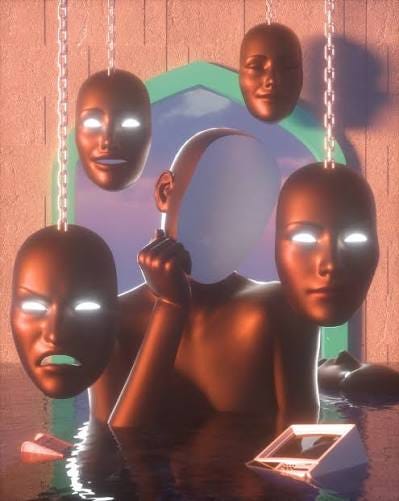
The fear of being imperfect or inadequate is a powerful force which can sometimes derail our thoughts from being written to being perfect. This fear can make one write while standing outside their own body. Instead of looking at the world through my eyes, i sometimes find myself imagining how the world might look back at me.
Creativity thrives on honesty. One needs to be true to themselves to realise their potential and execute it. It demands that we observe the world as faithffully as we can and then put it forward with sincerity. The moment we begin to preoccupy ourselves with anticipating every response that one’s work might get, it blunts the edges of feeling and expression. We must remember that sometimes our thoughts can be expressed without needing it to qualify as extraordinary. And we must not apologise for having perspective which might or might not be similar to others.
And yes, even before the internet, im sure people felt the need to be good— to be different in an extraordinary sense. That being said, in the contemporary world, the internet, and the constant social preoccupation through media, waters this apprehension. It reinforces the subconscious act of comparison and measuring yourself with everyone else on the planet, to deem whether something is better or worse.
Being ever present on social media has embedded it in our minds that every thought, every expression has the space for it to be compared, corrected, criticised, or ridiculed within minutes by strangers. With this in mind, comparison becomes almost involuntary.
Art has always required courage. And not always because it has to be something provocative or bold, but because expressing yourself creatively requires vulnerability. In writing, it is to reveal how your mind works. And in order to know that, you must allow yourself to be vulnerable and allow your thoughts to exist. When writing something for others to read, it is like saying “look, here is how i experienced the world.” that act alone can feel frightening in a space where any experience can go though the microscope of ridicule and scrutiny.
On occasion, I ask myself whether the fact that we’ve become so used to presenting ourselves online makes it impossible for us to create anything that is not expertly curated.
One very small yet illustrative example of this is writing book reviews.
I read a book, and it is natural for me to start forming my views about it, since some parts impress me and some don’t convince me. This whole experience seems finished, until I open the internet.
There, I come across a number of reviews made by people I do not know at all. These reviews contain insightful and, often, persuasive analysis of the book. At the same time, they gradually change my views on the book too. I start doubting my judgments and begin to think that I might have missed something very obvious in the book I read. For example, maybe the character I wasn’t impressed with was in fact very interesting. Before I realize it, I find myself unable to say what I really think, and a diluted opinion takes shape. What I find interesting here is not that my opinion changes. Changing one’s mind is healthy. The troubling reality is that sometimes i become hesitant to even articulate my first impression because i fear it may not be the “right” one.
The internet has given us access to an extraordinary intelligence, but it has also made trusting our own instincts unexpectedly challenging.
So, perhaps, we owe it to ourselves to spend a little longer with our own thoughts before inviting everyone else’s into the room. Perhaps we should write the review before reading other reviews, finish the essay before searching for opinions, and allow ourselves the freedom to arrive at imperfect conclusions that genuinely belong to us. There is value in dialogue, disagreement, and revision. But those should come after we have first listened to ourselves.
I don’t think the goal is to become indifferent to criticism or immune to other people’s perspectives. That would be another kind of blindness. The goal, rather, is to remember where our honesty begins— as people, and as a writer
.